
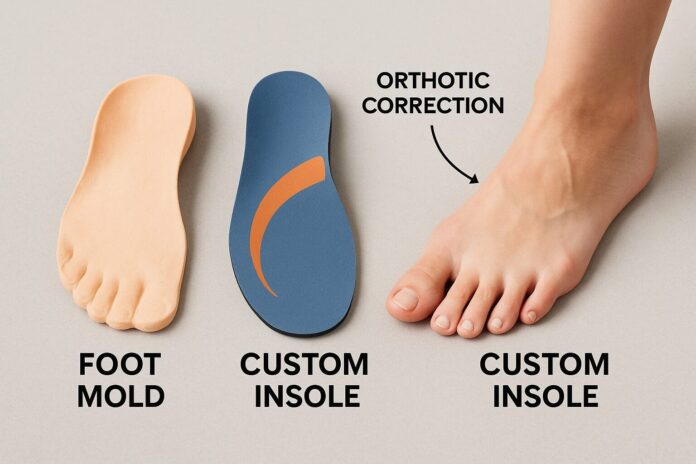
Custom orthotics are often recommended to improve foot function, relieve discomfort, and provide support during daily activities. Patients often misunderstand what custom orthotics do, who may benefit from them, and how they differ from over-the-counter inserts. Clarifying these misconceptions can help patients make more informed decisions about treatment and understand the role orthotics play in long-term foot and joint health. Here are some common misconceptions about custom orthotics:
Compare Foot Support Options
Store-bought shoe inserts provide basic padding for your feet. They cushion the heel, but they do not correct underlying bone structures. These products cannot address specific medical conditions as they use generic molds.
Custom orthotics require a detailed medical prescription from a doctor. The podiatrist assesses your walking pattern and takes precise molds of your feet. After the doctor sends the molds to a laboratory, technicians build the devices from durable materials. These specialized inserts control foot motion during daily activities. Hard materials provide rigid support, and soft materials offer extra cushioning.
Understand Orthotic Benefits
Custom orthotics relieve chronic heel discomfort, and they can also improve overall body alignment. The feet act as the body’s foundation, so poor foot mechanics can lead to issues in other joints. Doctors prescribe these devices for a wide range of medical conditions. Here are some of them:
- Plantar fasciitis
- Ankle instability
- Achilles tendinitis
- Foot arthritis
Athletes also use custom foot orthotics to improve physical performance. The inserts perfect their stride, and the support can help prevent sports injuries.
Expect Gradual Adjustment
The human body requires time to accept new physical supports. Orthotic devices change your foot mechanics, and your muscles adapt to this new position. Doctors often recommend a gradual break-in period for the new inserts. Patients wear them for a few hours daily, and they slowly increase the duration.
Instant pain relief rarely happens with new medical supports. The structural changes happen slowly, and the tissue inflammation needs time to heal. Although some patients expect immediate results, full recovery often takes several weeks. The podiatrist will schedule follow-up visits to monitor your medical progress. The doctor checks the fit, and they make minor adjustments to the materials.
Plan for Ongoing Support
Medical devices wear down over months and years of use. Hard inserts can last several years, but soft inserts require more frequent replacement. Aging affects the ligaments, and weight fluctuations alter the pressure on your soles. When your physical structure changes, the original custom foot orthotics lose their effectiveness.
You should also watch out for signs of worn-out foot supports. When you notice the following indicators, you should schedule a medical appointment:
- Visible cracks in the hard plastic.
- Flattened soft cushioning.
- Return of foot or ankle pain.
- Uneven wear on the bottom surface.
Regular medical checkups keep your treatment plan on track. The doctor inspects the wear patterns, and they evaluate your current symptoms. If the inserts show significant damage, you should replace them promptly.
Book Your Custom Orthotics Appointment.
Custom orthotics provide a fundamental treatment for various foot conditions; they correct physical imbalances and support long-term joint health. Proper care and timely replacement of orthotics are key to maintaining their effectiveness in supporting your feet and alleviating discomfort. Contact a qualified podiatrist near you to book your appointment for custom foot orthotics today.

