
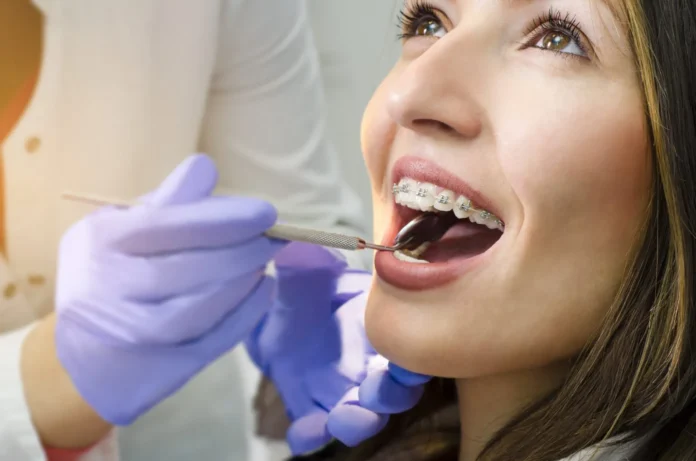
Braces are orthodontic devices used to gradually align and straighten teeth. While many people associate orthodontic care with teenagers, a growing number of adults are seeking treatment to improve their smiles. Many adults decide to align their teeth later in life, and modern orthodontics offers several ways to reach this goal. You can choose from a variety of options that suit different lifestyles, aesthetic preferences, and maintenance requirements.
Conventional Braces
Conventional braces are the most recognized orthodontic devices. They consist of small brackets attached directly to the front of your teeth, connected by a metal wire, and secured with elastic bands. The orthodontist periodically tightens the wire to apply steady pressure, which slowly moves the teeth into their intended positions. Conventional braces generally have two main material choices. Metal brackets are made of high-grade stainless steel and offer durability and effectiveness for making significant adjustments. Ceramic brackets are made of clear or tooth-colored materials, making them less noticeable than their metal counterparts. These ceramic brackets blend in with your natural enamel, but they function exactly like traditional metal brackets. Conventional braces are effective for correcting complex alignment issues. They are visible to others and require careful cleaning around the brackets and wires. Avoid hard or sticky foods that might damage the hardware.
Clear Aligners
Clear aligners provide a removable alternative to fixed brackets and wires. Instead of hardware attached to your teeth, this method uses a series of custom-made, transparent plastic trays. Each set of trays is molded to fit tightly over your teeth, and they apply gentle pressure to guide your teeth into a new position.
Clear aligners are valued for several reasons. The clear plastic material makes these aligners difficult to see, which can be appealing if you want to maintain a natural appearance in the workplace or social settings. Because the trays are removable, you can take them out when eating, drinking anything other than water, or brushing your teeth, which makes maintenance easier. Each set of trays is typically worn for one to two weeks before moving on to the next set in the sequence, allowing for gradual adjustment over time. Because they are removable, clear aligners require strict daily discipline; you need to wear the trays for 20 to 22 hours every day to achieve the planned results. They are generally recommended for mild to moderate alignment adjustments.
Lingual Braces
Lingual braces offer the mechanics of conventional braces with an entirely different placement. Instead of attaching the brackets to the front of the teeth, the orthodontist bonds them to the back, or lingual side, facing the tongue. Significant factors for lingual braces include their invisibility, as the hardware sits behind the teeth and is not visible when you smile or speak. This makes lingual braces a discreet option if you are concerned about aesthetics. The brackets are often custom-made to fit the unique contours of the back of your teeth, and they provide a tailored approach to orthodontic care. Having hardware close to the tongue can temporarily affect your speech and require a period of adjustment. Cleaning lingual braces requires extra attention because the brackets are harder to see and reach.
Talk to an Orthodontist Today
Choosing the right orthodontic device depends on your specific alignment needs and lifestyle preferences. Because every mouth is unique, only a professional evaluation can determine which methods are appropriate for you. Talk to an orthodontist today to discuss your goals, and review the treatment options available to you. They will take necessary images, assess your teeth, and help you outline a clear, structured plan for your orthodontic care.

