
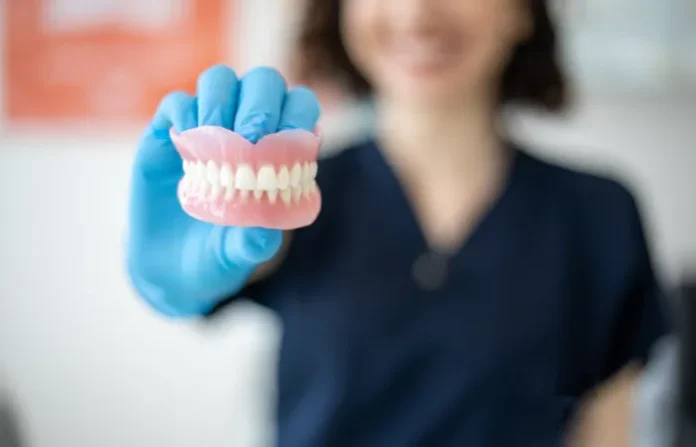
Dentures act as artificial replacements for missing teeth and surrounding tissues. Patients benefit from seeking these devices after tooth loss, as they provide a practical way to restore oral function. Dentists customize these oral appliances to fit individual mouth structures, enabling a precise fit. Here is more information on the types of dentures available and the mechanisms behind this dental treatment:
What Are Dentures?
Dentures are removable dental appliances designed to replace missing teeth, and they consist of a supporting framework that holds the artificial teeth in place. Dental professionals use materials such as acrylic resin or metal to construct the base. These appliances sit directly over the gums, restoring the mouth’s structural integrity.
What Are the Different Types?
Dental professionals offer several types of dentures, each addressing specific patterns of tooth loss. Complete dentures replace an entire arch of missing teeth. Partial dentures fill gaps left by a few missing teeth, and they attach to the remaining natural teeth with clasps. Both options require careful fitting by a dentist, so patients undergo a thorough evaluation first.
Immediate dentures are placed in the mouth right after a tooth extraction procedure. The gum tissue shrinks during the healing process, so these immediate devices require frequent clinical adjustments to maintain a proper fit. Overdentures fit over a small number of remaining natural teeth or dental implants. These remaining physical structures provide additional stability, which helps preserve the underlying jawbone over time.
What Do They Treat?
Dentures primarily treat edentulism, which is the clinical term for tooth loss. Tooth loss results from periodontal disease, dental decay, or facial trauma, and these appliances provide a restorative solution. Missing teeth can make chewing and speaking difficult, but dentures restore these fundamental oral functions. The devices also provide physical support to the facial muscles, preventing the facial structure from sagging.
How Do They Work?
Complete dentures rely on natural suction to stay attached to the gums. The base of the upper denture covers the palate, creating a seal that holds it firmly in place. Lower dentures rest on the gum ridge. They require muscle coordination from the tongue and cheeks to remain stable. Patients may use specialized dental adhesives for additional security, so the appliances do not shift during normal daily activities.
What Are the Benefits?
The use of dental prosthetics offers numerous physical benefits for the patient. They improve mastication, allowing individuals to consume a broader range of nutrients. Pronunciation often improves after the patient adapts to the new appliance, and the structural support prevents facial muscles from sagging over time.
Regular use of these oral appliances helps maintain the alignment of any remaining natural teeth, as partial dentures prevent neighboring teeth from shifting into the empty spaces. This preserves the overall bite alignment. They distribute chewing forces evenly across the entire mouth, protecting the jawbone from uneven wear and degradation.
Enhance Your Smile
Dentures offer a structured approach to treating tooth loss, and they restore key oral function. Patients benefit from consulting a dental professional to determine the most suitable type of prosthetic appliance. Regular dental check-ups help maintain the device’s condition and monitor overall oral health. Contact a local dental clinic to schedule a consultation.

