
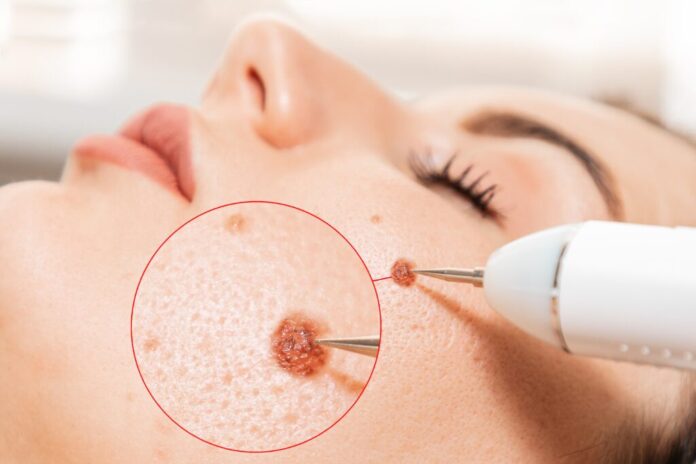
Skin cancer screening identifies problematic cells early. Mohs surgery treats these lesions, and it attempts to preserve healthy skin. When you require treatment, your doctor targets the exact tumor. This specialized treatment requires specific steps.
Preparation of the Surgical Site
The medical team prepares you for Mohs surgery. Your surgeon numbs the skin using an injected anesthetic. This helps minimize discomfort, and it gets the area ready for treatment. Once numb, the surgeon removes the visible tumor and a thin layer of surrounding tissue for examination. Preparation at this stage guides the next steps. Your doctor marks the removed tissue. This mapping lets your team pinpoint where any cells might remain when the tissue is examined later. Creating this detailed map supports the process for any additional layers that may be needed. Through these careful steps, your surgeon sets the stage for the next phase. The doctor works to preserve your tissue. Your team will try to keep the normal skin, and they will limit the extraction area. They mark the tissue and create a map of the site for orientation.
Evaluation of the Removed Tissue
The sample goes to the office laboratory, and the staff immediately freezes the tissue. Freezing the tissue helps preserve its structure, and it prevents changes that affect analysis. Next, they cut thin layers, allowing for a detailed view of the tissue margins. After slicing the sample, they stain the tissue. Staining highlights structures and abnormal cells, making them visible under the microscope. Preparation is complete after slicing and staining; the surgeon then examines the full margins. This step helps the doctor identify cancer cells, and they decide if more steps are needed. The wait time varies from case to case, but the team works efficiently. While you wait, your surgeon examines the bottom edges and checks the outer tissue layer. A microscope shows cellular structures. The surgeon looks for abnormalities and carefully reviews the entire sample. If the margins are clear, the analysis stops, and the wound is closed.
Eradication of the Remaining Disease
Sometimes the sample contains cancer cells. Your surgeon identifies the precise areas using the mapped markings as a guide. Because the map shows exact locations, the surgeon returns to the site to remove another thin layer. This process targets only tissue with abnormal cells, and it spares as much healthy skin as possible. Your surgeon uses the tissue map to keep each removal limited to the smallest necessary boundary. After each removal, the new sample is prepared and analyzed under the microscope. Each patient’s process may last different times.
With each step, the affected tissue is mapped and marked. Your care team maintains a clear record of every stage. This series of carefully planned steps is repeated any time cancer cells are identified, and sometimes several rounds are required. The extraction targets only the affected area. The doctor takes additional tissue, and they send it to the lab. Whenever abnormal cells remain, the process continues, and the lab performs another microscopic examination. The doctor repeats these exact steps. The removal of additional layers continues, and the testing cycle repeats.
Schedule Mohs Surgery Today
Monitor your skin, and report any changes. Regular checkups protect your overall health. If a spot looks suspicious, a doctor examines the area. Mohs surgery manages skin lesions. Learn about the process and prepare for your appointment. If you notice any skin changes, contact a medical professional to schedule your screening.

