How to Start Practicing Tai Chi at Home: A Complete Beginner’s Guide
Embarking on the journey of Tai Chi from the comfort of your home is both accessible and rewarding. Blending mindful movements with physical balance, this time-honored practice supports physical health and mental well-being. Whether you want to relieve stress, improve flexibility, or nurture longevity, practicing Tai Chi at home is achievable for anyone, regardless of age or experience. For those just starting, exploring virtual Tai Chi classes for beginners can provide expert instruction and structure as you begin. This guide covers core principles, practical steps, and useful resources to help you begin your Tai Chi practice at home with confidence. As you incorporate Tai Chi into your daily routine, you’ll unlock benefits that extend to every aspect of your well-being.
Tai Chi’s adaptable nature allows beginners to tailor routines to their needs, making it a sustainable addition to almost any lifestyle. Even when practicing solo, Tai Chi can cultivate mindfulness and mobility, both of which are essential for healthy living. Guided video classes, books, and reputable online resources provide the support and information you need to start safely and progress at your own pace. As you start to incorporate Tai Chi, you may want to learn more about the science behind mind-body exercises and their benefits.
Understanding Tai Chi
Tai Chi is a low-impact mind-body practice centered on posture, coordinated movement, breathing, and attention. It combines gentle movement, structural alignment, and mental calm. This integrated method makes Tai Chi accessible to virtually everyone, even those new to exercise or with mobility limitations. Regular Tai Chi practice can help reduce stress, improve balance, and support heart health, as highlighted in broad research studies from organizations such as the Harvard Health Publishing.
Choosing the Right Style
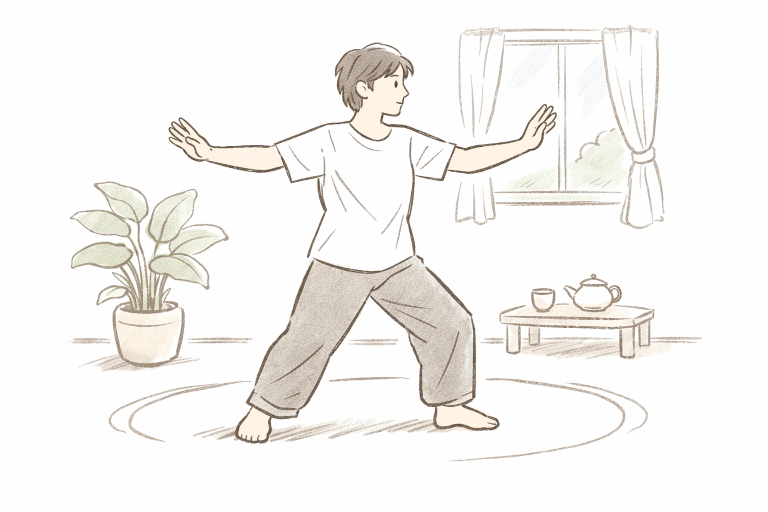
Multiple Tai Chi styles exist, each with distinct attributes:
- Yang Style: Characterized by smooth, continuous movements and moderate stances. It is a popular choice for beginners due to its gentle flow and accessible pace.
- Sun Style: Uses higher stances and fluid stepping, minimizing joint stress. This style is especially well-suited for people with knee issues or limited mobility.
- Chen Style: Incorporates a mix of fast and slow movements with deeper, more athletic stances. It may appeal to those with some background in fitness and flexibility.
For home practice, the Yang and Sun styles are typically the easiest entry points. Online video classes, books, and instructional websites often offer beginner sequences based on these styles.
Setting Up Your Practice Space
Creating a supportive environment is crucial to establishing a sustainable routine:
- Space: Reserve an area of at least 6 by 6 feet with a level, non-slip surface.
- Attire: Opt for loose, comfortable clothing that allows free movement.
- Footwear: Use lightweight, flat-soled shoes or go barefoot if your floor is clean and safe.
Minimize distractions and add calming elements such as soft lighting or pleasant music to enhance your practice atmosphere.
Learning the Basics
Before advancing to more complex routines, focus on mastering these essentials:
- Posture: Keep your head upright, spine aligned, chest relaxed, shoulders dropped, and waist loose to enable effective energy flow and stability.
- Weight Shifts: Become aware of shifting your weight between the legs. Mindful balance supports safe and effective movement.
Familiarizing yourself with these fundamental principles will form a strong foundation for your Tai Chi journey.
Structuring Your Practice
Daily or near-daily practice, even for short periods, is ideal. A sample 20-minute home session might look like this:
- Warm-Up (5 minutes): Start with joint rotations, light stretching, and moments of standing meditation to center your mind.
- Form Practice (10 minutes): Work through movements you’ve already learned and gradually introduce new ones.
- Cool-Down (5 minutes): End with gentle stretches and slow walking meditation to anchor the practice.
Committing to consistency is more valuable than the length of your session. A few mindful minutes daily will lead to steady progress and lasting benefits.
Tracking Your Progress
Measuring development can increase motivation and help you notice improvements, both physical and mental:
- Practice Journal: Log the dates, session lengths, and any challenges or breakthroughs you experience.
- Video Recordings: Use your phone or computer to review your technique and track visible improvement over time.
- Milestone Checklists: Track which movements or series you have mastered as your skills advance.
Note subjective outcomes as well, such as improved sleep, reduced anxiety, or decreased joint pain.
Common Mistakes to Avoid
Mindfulness in practice means paying attention to small details that affect overall quality:
- Avoid locking your knees to support proper balance and ward off strain.
- Keep shoulders relaxed. Raising them interrupts smooth breathing and can create tension.
- Coordinate torso and arm movements together, rather than moving arms in isolation.
- Focus on smooth transitions and relaxation instead of memorizing positions.
Avoiding these mistakes prepares you for deeper growth and greater satisfaction in your practice.
When to Seek Guidance
While solo practice is beneficial, there are times when professional instruction is important. Seek out an experienced teacher if you:
- Experience pain, discomfort, or challenges in maintaining balance.
- Feel uncertainty about the accuracy of your form or breathing.
- Desire personal feedback to address subtle mistakes or refine your technique.
Virtual and in-person classes can provide constructive corrections and individualized support to help you progress with confidence.
Beginning Tai Chi at home is an enriching and accessible endeavor that contributes to both physical vitality and mental peace. By following these steps, you can foster a meaningful, lifelong practice starting right where you are.
Conclusion
Starting a Tai Chi practice at home is a simple yet powerful way to improve both physical and mental well-being. Through gentle movements, mindful breathing, and consistent practice, Tai Chi can help reduce stress, improve balance, increase flexibility, and promote overall health. Its adaptable nature makes it suitable for beginners of all ages and fitness levels, allowing each person to progress at a comfortable pace. By choosing the right style, creating a calm practice space, and focusing on foundational techniques, you can build a sustainable routine that supports long-term wellness. Whether practicing independently or with guided instruction, Tai Chi offers a meaningful path toward greater mindfulness, relaxation, and vitality in everyday life.
- How To Choose Between Rural Space And Suburban Convenience When Buying A Parker County, Texas Home
- When a Mobile App Should Take Over the Screen: Full-Screen Overlay UX Practices for 2026
- Before You Fall In Love With A South Florida Waterfront Home: A 2026 Buyer’s Due-Diligence Checklist
- Selling Your House in Franklin, New Hampshire: A Comprehensive 2026 Guide
- How to Reduce Stress When Selling Your Home: A Practical Guide